Categories
Immigration

Thailand Privilege Visa

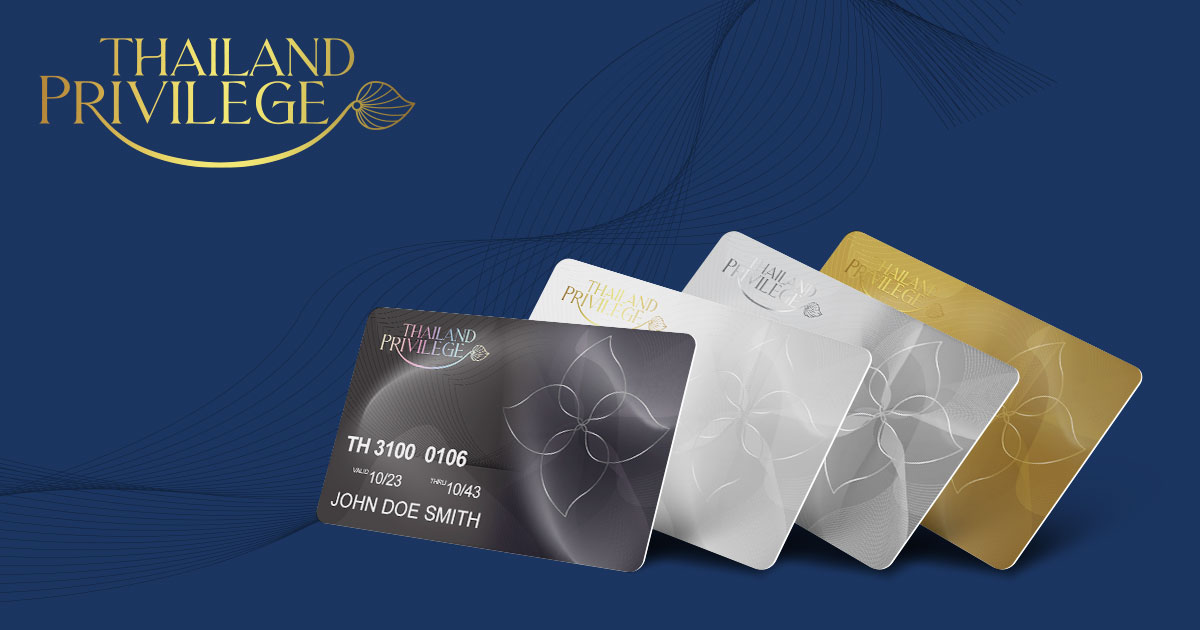
The Thailand Privilege Visa—formerly known as the Thailand Elite Visa—is a long-term residency program administered by Thailand Privilege Card Co., Ltd. (TPC), a state-owned enterprise under the Tourism Authority of Thailand. It is designed for foreign nationals who wish to reside in Thailand for extended periods with simplified immigration procedures and bundled lifestyle privileges, without the need to meet employment, retirement, or marriage-based eligibility criteria. This article explains how the program works, who it suits, available membership tiers, immigration rights, limitations, and practical considerations for applicants.

What the Thailand Privilege Visa is (and is not)

At its core, the Thailand Privilege Visa is a membership-based immigration program. Applicants pay a one-time membership fee and, in return, receive a renewable long-stay visa and a package of benefits administered through TPC.

It is important to understand what the visa does not do:

  • It does not grant the right to work in Thailand.

  • It does not provide permanent residency or Thai citizenship.

  • It does not exempt holders from Thai tax laws.

Instead, it offers long-term lawful stay with administrative convenience, particularly attractive to retirees, digital nomads who do not work locally, investors, frequent visitors, and high-net-worth individuals who value stability and ease of travel.

Visa classification and stay period

The Thailand Privilege Visa is issued as a Non-Immigrant “PE” visa. Depending on the membership tier, holders receive a visa valid for 5, 10, 15, or 20 years, typically granted in renewable increments of 5 years per visa stamp.

Each entry allows a stay of up to one year, renewable annually without leaving Thailand. Unlike most long-stay visas, holders are not required to meet financial thresholds (such as bank deposits or income minimums) to maintain their status.

Membership tiers and fees

Thailand Privilege currently offers several membership packages, differentiated by validity period, price, and number of privilege points included. While packages may evolve, the structure generally includes:

  • 5-Year Membership – Entry-level option suitable for long-term visitors testing extended residence.

  • 10-Year Membership – Balanced option for semi-permanent residents.

  • 15-Year Membership – Designed for families or long-term planners.

  • 20-Year Membership – Premium tier offering the longest stability and highest privileges.

Membership fees are paid once upfront and are non-refundable. Fees vary by tier and whether dependents are included. Importantly, the payment is for membership, not a visa fee in the traditional sense, which is why the program is not subject to many of the rules governing standard visa categories.

Privilege points and lifestyle benefits

A defining feature of the program is the Privilege Points system. Each year, members receive a fixed number of points depending on their membership tier. These points can be redeemed for services such as:

  • Airport limousine transfers

  • Fast-track immigration services

  • Golf green fees

  • Spa treatments

  • Health checkups

  • Hotel accommodations

  • Domestic flights (in some packages)

Points expire annually and do not roll over, encouraging regular use. While these perks are not immigration rights, they form a significant part of the program’s value proposition.

Immigration benefits and administrative convenience

From an immigration standpoint, the Thailand Privilege Visa offers several practical advantages:

  • No 90-day reporting requirement when handled through TPC (reporting is coordinated on the member’s behalf).

  • Fast-track airport immigration at major international airports.

  • Assistance with visa renewals, re-entry, and extensions, coordinated by dedicated member liaisons.

  • Multiple re-entry privileges included by default.

These benefits significantly reduce bureaucratic friction compared to retirement, business, or marriage-based visas, which require regular document renewals and financial proof.

Application process

The application process is centralized and relatively straightforward:

  1. Submission of application through Thailand Privilege Card Co., Ltd. or an authorized agent.

  2. Background check conducted by Thai immigration and law enforcement authorities (typically 4–8 weeks).

  3. Approval notification and invoice issuance.

  4. Payment of membership fee.

  5. Visa affixation, either at a Thai embassy/consulate abroad or at designated immigration offices inside Thailand.

Applicants must hold a clean criminal record and must not be blacklisted or overstaying in Thailand at the time of application. Prior visa history is reviewed but does not automatically disqualify applicants.

Taxation and residency considerations

Holding a Thailand Privilege Visa does not automatically make a person a Thai tax resident. Tax residency depends on physical presence (generally 180 days or more in a calendar year) and the nature of income.

Key points:

  • Foreign-sourced income may become taxable if remitted into Thailand under current tax interpretation.

  • Employment or business activity conducted in Thailand without a proper work permit remains illegal, regardless of visa status.

  • Long-term residents should seek professional tax advice, especially if maintaining international income streams.

The visa provides immigration stability, not tax immunity.

Dependents and family members

Some membership tiers allow for dependents (spouse and children) to be added for an additional fee. Dependents receive similar visa privileges but may have separate point allocations and administrative handling.

Children enrolled as dependents typically age out at a defined limit, after which independent membership or a different visa category is required.

Limitations and risks to understand

Despite its advantages, the Thailand Privilege Visa has limitations:

  • No work authorization without a separate work permit and eligible employment structure.

  • No path to permanent residency or citizenship on its own.

  • High upfront cost, which may not be economical for short-term residents.

  • Policy risk, as program terms are governed administratively and may change over time (existing memberships are typically grandfathered, but benefits may be adjusted).

Applicants should treat the program as a long-term residency convenience tool, not an immigration investment leading to settlement rights.

Who the Thailand Privilege Visa is best suited for

This visa is particularly appropriate for:

  • Retirees who do not meet retirement visa financial thresholds.

  • Remote professionals who earn income abroad and do not work locally.

  • Frequent visitors seeking long-term stay without repetitive visa runs.

  • High-net-worth individuals valuing time savings and administrative ease.

  • Families seeking predictable, long-term residence without employment ties.

Conclusion

The Thailand Privilege Visa occupies a unique position in Thailand’s immigration system. It trades traditional eligibility requirements—such as income, employment, or family ties—for a membership model emphasizing stability, convenience, and lifestyle access. For the right profile, it offers one of the most predictable and low-maintenance ways to live long-term in Thailand.

However, it is not a universal solution. Applicants must carefully weigh cost, work restrictions, tax exposure, and long-term plans before committing. When aligned with the holder’s lifestyle and financial structure, the Thailand Privilege Visa can be an exceptionally efficient pathway to extended residence in Thailand without the administrative burdens common to other visa categories.
Categories
Immigration

Thailand LTR Visa

The Thailand LTR Visa represents a major modernization of Thailand’s immigration system. Unlike traditional visa categories based on retirement, tourism, or temporary work, the LTR offers structured long-term residency for up to 10 years, targeting specific groups that contribute economically or professionally to Thailand.

Administered by the Thailand Board of Investment (BOI) in collaboration with the Immigration Bureau and other authorities, the LTR Visa is crafted to attract wealthy individuals, skilled professionals, and investors under a highly regulated but flexible framework.

This guide examines the LTR Visa’s legal underpinnings, eligibility classes, application pathway, resident privileges, and key compliance requirements.

1. Legal Foundation and Regulatory Authorities

1.1 Applicable Laws and Regulations

  • Immigration Act B.E. 2522 (1979) – Governs all immigration matters.

  • BOI Announcements and Royal Gazette Notifications (2022) – Define LTR-specific criteria and process.

  • Internal Ministerial Regulations – Detail endorsements, fees, and reporting requirements.

1.2 Key Agencies Involved

  • Board of Investment (BOI) — Initial screening and endorsement.

  • Thai Immigration Bureau — Visa issuance and monitoring compliance.

  • Revenue Department — Oversees taxation aspects, particularly for skilled professionals.

2. Structure of the LTR Visa

Aspect Details
Total Duration 10 years (two 5-year periods)
Entry Rights Unlimited multiple entries
Stay per Entry Up to 5 years
Reporting Annual (instead of 90-day reports)

Unlike conventional visas, the LTR reduces the administrative burden significantly while still requiring yearly status confirmation.

3. Eligibility Categories: Who Can Apply

The LTR Visa covers four main applicant groups, each with clear financial and professional thresholds:

3.1 Wealthy Global Citizens

  • Annual personal income of at least USD 80,000 over two years.

  • Net assets exceeding USD 1 million.

  • Investment in Thai assets or bonds of at least USD 500,000.

3.2 Wealthy Pensioners

  • Minimum age: 50 years.

  • Pension or passive income of USD 80,000/year, or USD 40,000/year combined with investment.

3.3 Work-from-Thailand Professionals

  • Employed by a foreign company.

  • Annual income above USD 80,000.

  • Employer must have substantial global revenues.

3.4 Highly Skilled Professionals

  • Salary of at least USD 80,000/year, with some exemptions.

  • Expertise in sectors like technology, biotech, healthcare, and infrastructure.

  • Minimum 5 years’ professional experience (unless holding a Ph.D.).

3.5 Dependents

  • Spouse and up to four children under 20 years of age can accompany the principal applicant.

4. The LTR Visa Application Process

Step 1: Application Submission

  • Online application via the BOI’s LTR Visa system.

  • Documentation required:

    • Proof of income/assets.

    • Employment contracts or business documentation.

    • Health insurance policy meeting Thai standards.

Step 2: BOI Review

  • Applications are screened for eligibility and documentation accuracy.

  • Processing times generally range between 20–45 working days.

Step 3: Visa Collection

  • After approval, applicants can collect their visas:

    • Abroad, through a Thai embassy or consulate, or

    • Inside Thailand, via the Immigration Bureau.

  • Visa issuance fee: THB 50,000 per applicant.

Step 4: Digital Work Permit Application (if needed)

  • Separate but simplified application process for LTR holders intending to work.

5. Key Privileges for LTR Visa Holders

Privilege Benefit
Airport Fast-Track Services Special immigration lanes at major airports.
Long-Term Work Rights Through a streamlined Digital Work Permit system.
Tax Concessions Flat 17% income tax for qualifying professionals.
Family Inclusion Spouses and children enjoy the same visa validity.
Relaxed Property Rules Easier condominium purchases under foreign ownership laws.

6. Ongoing Compliance and Reporting Duties

LTR visa holders must adhere to specific conditions to maintain their status:

  • Annual residence reports submitted to Immigration.

  • Valid health insurance (minimum USD 50,000) maintained at all times.

  • Notification to authorities of changes in:

    • Employer (for working LTR holders).

    • Investment status (for investor LTR holders).

    • Family status (marriage, divorce, births).

Failure to maintain these conditions can lead to visa cancellation and possible difficulties with future Thai immigration applications.

7. Practical Difficulties and Realities

7.1 Documentation Precision

  • Proof of income, employment, and assets must meet Thai administrative standards.

  • Non-Thai documents must be translated and legalized.

7.2 Misconceptions About Permanent Residency

  • Holding an LTR Visa does not automatically qualify for Permanent Residency (PR).

  • Separate PR applications and qualifications apply.

7.3 Provincial Implementation Differences

  • Variations exist in Digital Work Permit processing across immigration offices, especially outside Bangkok.

8. Final Thoughts

Thailand’s Long-Term Resident Visa reflects a clear intention to restructure its foreign resident demographics, focusing on those who offer economic, intellectual, and societal value.

While offering major advantages such as work authorization, reduced tax burdens, and long-term immigration stability, the LTR Visa is targeted narrowly. Applicants must carefully prepare their evidence, understand their long-term compliance obligations, and manage administrative interaction with Thai authorities in a proactive way.

For those who qualify, the LTR Visa presents a unique and strategic pathway to integrate more deeply into Thai society and economy.

Categories
Immigration

Thailand SMART Visa

Thailand Smart Visa program was introduced to attract highly skilled professionals, investors, entrepreneurs, and executives in targeted industries that drive Thailand’s economic and technological development. Unlike traditional visa categories, the Smart Visa offers long-term residency benefits, work permit exemptions, and enhanced business opportunities for foreign talents.

This article provides a detailed breakdown of the Smart Visa, including eligibility requirements, benefits, challenges, and practical application steps.

1. Overview of Thailand’s Smart Visa Program

The Smart Visa was launched in 2018 to address skill shortages and promote foreign investment in high-growth industries. The program is designed to replace traditional work visas and business visas, which require complex work permit applications and employer sponsorships.

Unlike a Non-Immigrant B Visa (Business Visa), which ties foreign professionals to a specific employer, the Smart Visa offers greater flexibility, allowing professionals and investors to work without a work permit and stay for up to 4 years.

2. Types of Smart Visas and Eligibility Requirements

There are five categories of Smart Visas, each tailored for different types of foreign experts, investors, and entrepreneurs.

2.1 Smart “T” Visa (Talent – Highly Skilled Experts)

This visa is for foreign experts in scientific and technological fields.

Eligibility Requirements:

  • Must have expertise in science, technology, or engineering.

  • Employment must be in one of Thailand’s targeted industries.

  • Minimum salary of THB 100,000 per month.

  • Employment contract of at least one year.

Key Benefit:
✅ Exemption from work permit requirements—can work freely in Thailand.

2.2 Smart “I” Visa (Investor)

For investors funding technology-based businesses in Thailand.

Eligibility Requirements:

  • Must invest at least THB 20 million in targeted industries.

  • Investment can be in government-approved startups, joint ventures, or technology-based firms.

Key Benefit:
4-year renewable visa with multiple-entry benefits.

2.3 Smart “E” Visa (Executive – Senior Managers & Experts)

For high-level executives working in technology-driven companies.

Eligibility Requirements:

  • Must hold senior management positions (e.g., CEO, CTO, Managing Director).

  • Minimum salary of THB 200,000 per month.

  • Must have at least 10 years of work experience in the relevant field.

Key Benefit:
4-year visa without the need for a work permit.

2.4 Smart “S” Visa (Startup Entrepreneurs)

Designed for startup entrepreneurs planning to launch a tech-based business in Thailand.

Eligibility Requirements:

  • Must set up a technology-based startup in Thailand.

  • Show proof of at least THB 600,000 in financial support.

  • Participate in a government-certified startup incubator program.

  • Maintain at least 25% ownership in the company.

Key Benefit:
One-year renewable visa with a pathway to a longer stay if the business succeeds.

2.5 Smart “O” Visa (Spouses and Dependents)

This visa is for dependents (spouses and children) of Smart Visa holders.

Eligibility Requirements:

  • Must be the legal spouse or child of a Smart Visa holder.

Key Benefit:
No additional work permit required for spouses who want to work in Thailand.

3. Targeted Industries Under the Smart Visa Program

To qualify for a Smart Visa, applicants must work in Thailand’s targeted industries, which include:

Technology & Digital Economy

  • Artificial Intelligence (AI)

  • Software and IT services

  • Cybersecurity

Advanced Manufacturing

  • Robotics and automation

  • Biotechnology

  • Aerospace industry

Healthcare and Medical Innovations

  • Medical research and biotechnology

  • Healthcare startups

Renewable Energy & Infrastructure

  • Smart grids and sustainable energy

  • Advanced transportation systems

4. Smart Visa vs. Traditional Work Permits

Feature Smart Visa Traditional Work Permit (Non-B Visa)
Work Permit Required? ❌ No ✅ Yes
Visa Validity Up to 4 years 1 year (renewable)
Employer Sponsorship Needed? ❌ No ✅ Yes
Industries Restricted? ✅ Yes (Only in targeted sectors) ❌ No (More flexibility)
Dependent Benefits? ✅ Yes (Spouse can work) ❌ No

5. Application Process for the Smart Visa

Applying for a Smart Visa is a multi-step process and requires approval from various government agencies.

Step 1: Pre-Qualification Assessment

✔ Submit documents to the Board of Investment (BOI) Thailand Smart Visa Unit.
✔ Wait for initial approval (takes about 30 days).

Step 2: Qualification Endorsement

✔ The BOI forwards the application to relevant agencies (e.g., Ministry of Science and Technology).
✔ If approved, the applicant receives a qualification endorsement letter.

Step 3: Visa Issuance

✔ Visit a Thai Embassy or Immigration Office to collect the Smart Visa.
✔ Register with Thai Immigration within 90 days after entering Thailand.

6. Challenges and Considerations

While the Smart Visa provides substantial benefits, not all applicants qualify.

🚨 Key Challenges:
Salary Requirements – High minimum salary thresholds make it difficult for startups.
Limited Industry Scope – Only technology-driven industries are eligible.
Slow Processing Times – The endorsement approval process can take several months.
Difficult for Startups – The Smart “S” Visa requires financial proof, which can be a barrier for early-stage startups.

7. Recent Developments and Future Outlook

Expansion of Eligible Industries: The Thai government is considering adding more digital economy sectors.
Faster Processing Times: Efforts are being made to streamline the application process.
More Flexible Investment Requirements: There have been discussions about lowering the investment threshold for Smart “I” and Smart “S” applicants.

8. Conclusion: Is the Smart Visa Right for You?

The Smart Visa is ideal for:
Foreign professionals in technology and innovation-driven industries.
Investors funding high-tech businesses in Thailand.
Entrepreneurs launching startups in the digital economy.
Executives in high-growth sectors.

However, businesses outside of Thailand’s targeted industries may find the traditional work permit system more accessible.

If you qualify for a Smart Visa, it’s one of the best options for living and working in Thailand without bureaucratic hurdles.

Categories
Immigration

Thailand Elite Visa

Thailand Elite Visa. The Thailand Privilege program (commonly known as the Thailand Elite Visa) is a government-backed long-stay membership that grants eligible foreign nationals multi-entry, long-duration visas together with a package of lifestyle, immigration and concierge privileges. The program is administered by Thailand Privilege Card Co., Ltd., a company wholly owned by the Ministry of Tourism and Sports, and it is sold as a membership rather than a conventional immigration status — members pay a one-time membership fee (varying by tier) and receive a visa linked to the membership length and benefits.

Who the program is for and basic eligibility

The program targets foreigners who want a hassle-reduced long-term presence in Thailand without the employment or investment requirements of other long-term visas. Typical applicants include retirees, frequent travelers, digital nomads, businesspeople, and high-net-worth individuals. Basic eligibility normally requires a valid foreign passport, no disqualifying criminal record or bankruptcy history, and compliance with Thai immigration rules; specific documentary checks (including background screening) are part of the application. The program does not generally grant work rights — members who wish to work for a Thai employer must still obtain the appropriate non-immigrant work authorizations or permits.

Membership tiers, duration and fees (practical snapshot)

The program is structured into tiers that trade duration and benefits against the membership fee. Typical publicized tiers include Bronze, Gold, Platinum, Diamond, and Reserve (sometimes described as “Bronze/Gold/Platinum/Diamond/Reserve” or similar names), with membership validity options ranging from five to twenty years. Fees vary substantially by tier: for example, Bronze packages have been promoted in the mid-hundreds of thousands of Thai baht for a five-year membership, Gold at a higher five-year price with privilege points, Platinum and Diamond at higher fees with 10–15 year validity, and Reserve or comparable top tiers carrying multi-million-baht price tags and invitation-only rules. Family add-ons or promotions occasionally reduce the fee for dependents. Because tiers and promotional pricing have changed recently, applicants should verify current membership options and pricing with the program operator.

Core benefits and service model

Members receive a bundle of benefits intended to simplify entry and life in Thailand. Common features include: a multi-year multiple-entry visa (5-year visa stamps typically issued and renewable in line with membership duration), VIP immigration fast-track and airport assistance, a personal concierge or member services center, expedited or assisted immigration paperwork (e.g., visa extensions and 90-day reporting support), access to exclusive lounges and partner discounts (hotels, hospitals, golf, and lifestyle services), and priority or facilitated access to government services in some cases. The program emphasizes convenience and lifestyle access rather than immigration entitlements such as work permission.

Application process and practical steps

The application is submitted through the Thailand Privilege Card operator. The usual steps are: initial application and identity/background screening; payment of the membership fee; issuance of membership (and then a privilege visa sticker or visa documentation for entry into Thailand); and arrival facilitation where member services assist with arrival formalities. After arrival, the member typically receives ongoing support for immigration matters covered by the package (for instance, simplified handling of visa stamp renewals and 90-day reports). Processing times, acceptance criteria and documentation requirements are administered by the program operator; applicants should expect verification checks and to provide identity documents, proof of funds where required, and any other documents specified by the operator.

Limitations, legal status and interaction with Thai immigration law

Important legal realities shape the program’s value: (1) the Privilege membership is a paid, private program administered under license and it does not automatically confer permanent residence or citizenship; (2) membership visas do not inherently grant the right to work in Thailand — separate work permits are necessary if employment is intended; (3) membership rights and benefits can change with program rules or policy updates, and promotions or new tiers may be periodically announced; and (4) program admission is discretionary and may be subject to rejection on standard immigration or security grounds. For anyone seeking secure long-term residence, the Privilege program should be evaluated against alternatives (work visas, investment visas, the new LTR/long-term resident options where applicable, and eventual permanent residency) to determine which path fits long-term objectives.

Cost/benefit considerations and practical advice

Whether the program is “worth it” depends on personal priorities. For frequent travelers or those who prize convenience and concierge services, the predictable fee model and administrative support can be attractive. For those seeking employment in Thailand or a route to permanent residency at a lower cost, other visa classes (work, investment, LTR) may be more appropriate. Key practical considerations include: verifying the current public fee schedule and any family-add-on pricing or promotions; checking which specific immigration services are included (some packages cover more immigration assistance than others); confirming whether VIP airport services are available at particular airports; assessing tax and banking implications of long-term presence; and confirming refund or transfer rules in the membership contract. Because pricing, tiers and promotional offers have changed in recent years, always request the current terms in writing before payment.

Interaction with other residency or tax issues

A Thailand Privilege membership affects practical residency (time spent in country, ease of re-entry) but not tax residency rules by itself. Individuals should assess whether their intended physical presence will create tax residency in Thailand (generally based on the 180-day rule and local tax regulations) and consult tax advisors about reporting and withholding implications. Similarly, holding a long-stay membership may simplify access to local services (bank accounts, driving licenses) in practice but documentation and local requirements still apply. Where permanent residency or eventual naturalization is a goal, Privilege membership may help with physical presence but is not a substitute for formal immigration pathways that lead to settlement.

Conclusion — where Privilege fits in your planning

The Thailand Privilege (Elite) Visa is a distinctive product: a paid membership that packages long-stay visa convenience with concierge services and lifestyle benefits. For expatriates who value streamlined immigration administration, reduced arrival friction and hospitality-style perks, it provides immediate advantages; for those focused on employment rights, long-term settlement, or lower-cost residency, alternative visa classes may be more suitable. Because the program’s tiers, pricing, and promotions evolve, prospective applicants should confirm current membership options, read the membership contract carefully, and consider immigration and tax advice tailored to their situation before committing to a fee-based membership.