
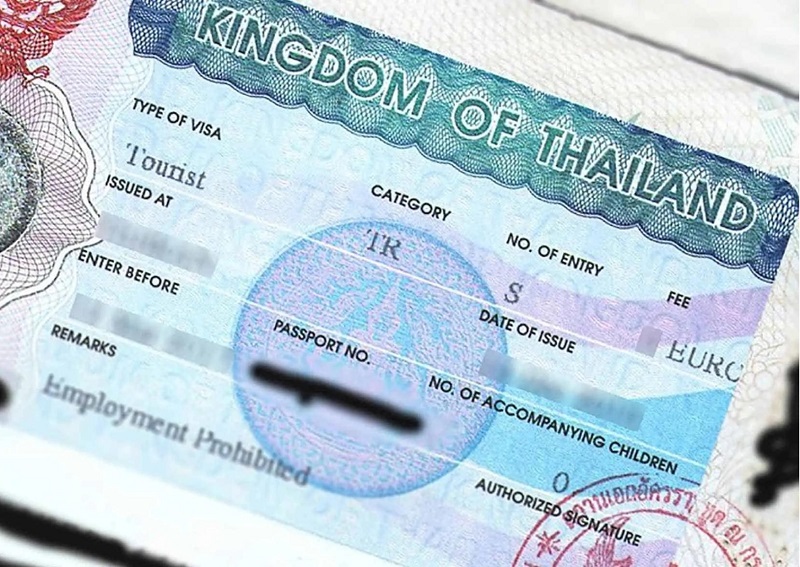
Thailand continues to refine its approach to foreign visitors in 2026, balancing tourism revenue with tighter controls on overstays and unauthorized activity. The most notable shift involves the temporary expansion of visa-free stays that began in 2024. Cabinet decisions in May and subsequent refinements have moved the system toward shorter standard exemptions for the majority of nationalities while preserving specialized long-stay pathways. This overview examines the current short-term entry rules, mandatory digital formalities, formal visa categories for extended presence, and practical steps travelers should take before departure. Learn how a Thailand Visa can support your short-term or long-term goals in Thailand.
Transition in Visa-Exempt Entry
For much of the period following mid-2024, passport holders from approximately 93 countries and territories received a 60-day stamp upon arrival for tourism or short business purposes. In May 2026 the Cabinet approved the withdrawal of that expanded arrangement. Under the revised structure most eligible nationalities receive a standard 30-day exemption, with a possible single extension of another 30 days available at an Immigration office for a modest fee. A smaller group of territories is limited to 15 days, while Visa on Arrival is restricted to a handful of nationalities. Bilateral agreements that grant longer periods—such as 90 days for certain partners—remain intact.
Monitoring the Royal Gazette publication date remains essential because the new limits take legal effect only fifteen days after official announcement. Until that moment the prior 60-day practice continues at ports of entry. Travelers already inside the country keep the stamp they received; the change is not applied retroactively.
Airlines and immigration officers still expect a passport valid for at least six months beyond arrival, evidence of onward or return travel, and sufficient funds—commonly cited as 20,000 THB per person or 40,000 THB per family. Random checks for these items have increased.
The Mandatory Digital Arrival Card
Every non-Thai national arriving by air, land, or sea must complete the Thailand Digital Arrival Card (TDAC) online within three days before arrival. The free form replaced the old paper TM6 and captures personal details, flight information, intended address in Thailand, and a basic health declaration. A confirmation is generated for presentation at immigration. Incomplete or late submissions can cause delays. Official government portals are the only safe source; third-party sites charging fees should be avoided.
Formal Tourist and Non-Immigrant Options
When a 30-day exemption is insufficient, a Tourist Visa (TR) obtained in advance through the e-Visa system or a Thai embassy remains the simplest alternative. A single-entry version typically permits 60 days with one possible 30-day extension, while a multiple-entry version valid for six months allows repeated 60-day stays. Application documents usually include a passport scan, recent photograph, flight itinerary, accommodation details, and proof of funds.
For stays measured in months rather than weeks, several non-immigrant categories exist. The Non-Immigrant B supports employment with a Thai company once a work permit is secured. The Non-Immigrant O covers retirement for those aged 50 and above, marriage to a Thai citizen, or certain family reunification situations. Retirement applicants generally need to demonstrate either an 800,000 THB bank deposit held for a qualifying period or monthly income of 65,000 THB, plus approved health insurance.
Choosing the appropriate non-immigrant category early prevents last-minute complications at the border or during extension applications. Education visas support enrollment in recognized Thai institutions, while specialized programs address high-skilled talent and investment.
Longer-Stay Programs for Remote Professionals and High-Value Residents
Two prominent multi-year options continue to attract attention. The Destination Thailand Visa targets remote workers and participants in approved cultural or wellness activities, offering five-year multiple-entry validity with 180-day stays that can be extended once. A separate Long-Term Resident program provides ten-year privileges for wealthy individuals, skilled professionals, and certain pensioners who meet income or asset thresholds. Membership-based privilege cards supply multi-year multiple-entry access in exchange for a one-time fee and deliver convenience services such as airport fast-track.
Each of these routes carries its own documentation standards, financial proofs, and reporting obligations. Applicants must apply from outside Thailand in most cases and should verify the latest requirements on official embassy or Board of Investment portals.
Practical Preparation and Compliance
Regardless of category, consistent practices reduce friction. Complete the TDAC on time, carry printed and digital copies of supporting documents, and avoid repeated short entries that may appear as de-facto residence. Overstaying triggers daily fines, possible detention, and future entry bans. Extensions, when available, should be requested well before the current permission expires.
Consulting the official Thai e-Visa portal and the nearest Royal Thai Embassy before booking non-refundable travel ensures the most accurate nationality-specific advice. Processing times for formal visas vary by post; applying several weeks in advance remains prudent.
Health insurance covering medical treatment in Thailand is strongly recommended for all visitors and is mandatory for many long-stay categories. Local laws regarding work, property ownership, and reporting of address changes must be observed carefully.
Broader Context and Outlook
Thai authorities have described the 2026 adjustments as a move toward quality tourism, reciprocity with partner countries, and reduced opportunities for misuse of short-stay privileges. The e-Visa system has expanded worldwide, simplifying applications for those who need formal permission. Land-border entries face additional scrutiny in some locations, with informal caps on the number of visa-exempt crossings per year under discussion.
Travelers whose plans exceed a few weeks should evaluate whether a formal tourist visa, a remote-work authorization, a retirement pathway, or a privilege membership best matches their circumstances. Those with Thai family ties or employment offers can explore the corresponding non-immigrant routes. In every case the decisive factors remain passport nationality, purpose of stay, and available supporting evidence.
In summary, Thailand’s 2026 visa landscape offers clear short-term access for many nationalities under a tightened exemption regime, alongside a range of structured options for longer presence. By confirming the current exemption status for one’s passport, completing the digital arrival card, and selecting the correct formal visa when needed, visitors can enter and remain in compliance. Official government sources and embassy guidance remain the authoritative references as implementation details continue to settle throughout the year.